A commercial account fits when you're running more than a single dumpster a month or juggling multiple crews across Wake County. Instead of calling in a fresh quote for every Oakwood renovation or Wakefield new-build,…
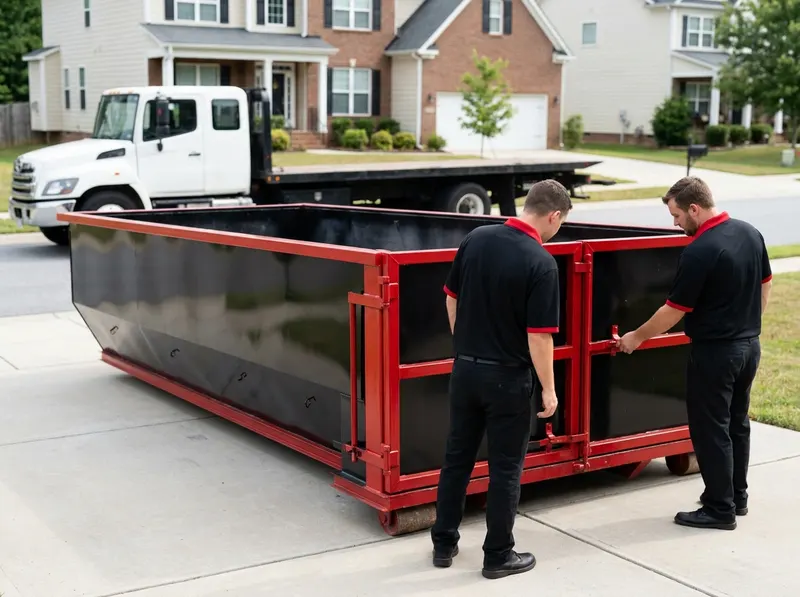
A commercial account fits when you're running more than a single dumpster a month or juggling multiple crews across Wake County. Instead of calling in a fresh quote for every Oakwood renovation or Wakefield new-build, your sizes and rates are already on file, so ordering a bin takes one message. General contractors framing spec homes near Bedford at Falls River, roofers tearing off in Five Points, and property managers turning units around North Hills all use the same setup: a known price, a scheduled swap, and a debris box that doesn't sit full while trades stand around.
The trade-off against booking one dumpster at a time is simple. One-off rentals make sense for a homeowner clearing a garage once. A standing account makes sense when downtime costs you money, a full bin stalling a Mordecai gut job or a Boylan Heights kitchen tear-out is more expensive than the haul itself. Account holders get priority scheduling, which matters when a crew finishes demo Friday and needs an empty box Monday morning. You still choose the size per job: a 10 or 15 yard for tight lots in Cameron Village where driveway space is limited, a 20 yard for most remodels, and a 30 or 40 yard for full-frame builds or roofing loads out near Brier Creek.
Billing is the part contractors care about most, so it stays flat and predictable. Each haul is priced by bin size and disposal weight, heavy loads like concrete, tile, and shingles are billed separately from light debris so you're never overpaying for a light load or blindsided on a heavy one. We publish a size guide and a prohibited-items list so your foremen know what goes in the box before pickup day, which keeps overage and contamination fees off your invoice. Concrete, brick, and clean fill go in a dedicated bin because those materials are weight-heavy and disposed of differently.
Placement is worked out per site. Most bins drop on a driveway or a graded staging area without a permit. If a bin has to sit in the street, common on the older, narrower lots in Oakwood and Boylan Heights, a Raleigh right-of-way permit may be required, and we'll flag that when you order so the drop isn't delayed. Give us the address, the trades you're running, and how fast you fill, and we'll recommend a size and swap cadence that matches the pace of the job.
Every job gets a firm, written price after a free on-site visit.
Tell us about your contractor & commercial accounts job in Raleigh and we'll send a clear, written quote, usually the same day.
 Clear Out Dumpster Rental